Build a Playful Brand with the Doggy Funky Font
When you run a small business, every visual choice tells a story. The colors on your packaging, the layout of your website, and especially the fonts you choose all work together to shape how customers see you. A font isn't just letters on a screen; it's a quiet ambassador for your brand's personality. Doggy Funky is one of those rare display fonts that brings warmth, charm, and a distinct sense of fun to the table without feeling childish or unprofessional.
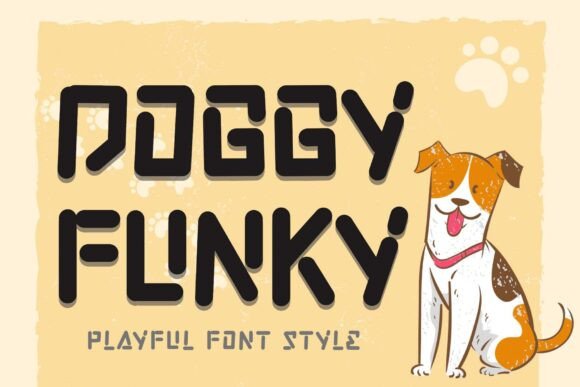
Doggy Funky is a cute and unique display typeface designed with uppercase, lowercase, numerals, punctuation, and multilingual support. It carries a bouncy, hand-drawn energy that feels approachable and friendly. There's a gentle whimsy to its letterforms, a softness that makes it feel like spring mornings and sunny afternoons. It's not a serious corporate font, and that's exactly the point. For the right brand, it communicates warmth before a single word is read.
What Doggy Funky Brings to Your Brand Voice
Think about the last time you picked up a product simply because the label made you smile. That's the kind of emotional response Doggy Funky can create. Its personality sits somewhere between a playful handwritten note and a carefully crafted display font. The letter shapes feel organic and slightly imperfect, which gives them a human touch that polished sans serif fonts sometimes lack. For a small business trying to build genuine connections with customers, that human touch matters more than you might expect.
This is a display font, which means it's meant to make a statement at larger sizes. It's not designed for long paragraphs of body text, but it shines when used for headlines, logos, and short bursts of copy where personality counts most. The font includes a full set of uppercase and lowercase characters, which gives you flexibility when designing layouts. You also get numerals and punctuation, so you can maintain consistency across price tags, dates, and social media captions without switching to another typeface for small details.
Multilingual support is another practical feature that's easy to overlook until you need it. If your customer base includes speakers of languages beyond English, having a font that handles accented characters gracefully means you won't be scrambling to find a substitute when you're designing bilingual packaging or promotional materials.
Where a Playful Display Font Fits Into Real Business Materials
Doggy Funky isn't a one-trick typeface. Its cheerful character makes it suitable across a wide range of customer-facing touchpoints, as long as you use it thoughtfully. Let's walk through some realistic examples of where this font could strengthen your brand presence.
Logos and Brand Marks. A bakery specializing in custom cookies could use Doggy Funky for its main wordmark. The font's rounded, friendly letterforms would echo the handmade quality of the products. Pair it with a simple icon, and you have a logo that feels both professional and warm. A pet boutique, a children's clothing line, or a handmade soap brand could all benefit from the same approach.
Product Labels and Packaging. Imagine a candle jar with a clean white label. In the center, the scent name appears in Doggy Funky, immediately giving the product a handcrafted, boutique feel. Below it, the ingredients and weight sit in a readable sans serif font. The contrast makes the label feel intentional and designed, not thrown together. The same logic applies to honey jars, tea tins, skincare bottles, and greeting card backs.
Thank-You Cards and Stickers. Small touches like a thank-you note tucked into an online order can turn a one-time buyer into a repeat customer. Doggy Funky works beautifully on small printed cards where a short message like "You're the best!" or "Thanks for supporting our little shop" needs to feel genuine and warm. Stickers with your brand name or a seasonal greeting become tiny billboards when customers stick them on laptops and water bottles.
Menus and Flyers. A café or ice cream shop could use Doggy Funky for menu headers, seasonal specials, or chalkboard-style event flyers. The font's playful nature sets expectations before a customer even reads the flavor names. It says, "This place is relaxed, friendly, and probably serves something delicious."
Website Banners and Social Media Graphics. On a homepage hero image or an Instagram story, Doggy Funky draws attention quickly. Use it for sale announcements, new product reveals, or quote graphics. On Pinterest, where eye-catching text overlays drive clicks, a font with personality helps your pins stand out in a sea of generic sans serif titles. For digital ads, a headline set in Doggy Funky can stop a thumb mid-scroll, especially when the product being advertised has a cheerful or creative angle.
Building Consistency Across Every Touchpoint
One of the fastest ways for a small business to look more established is to use the same typeface family across multiple materials. When your logo, your website headers, your product tags, and your social media templates all share typographic DNA, customers start to recognize you even before they see your full brand name. That recognition builds trust over time. Doggy Funky can serve as the connecting thread that runs through your visual identity, especially when you designate it as your primary display font and pair it with a simple secondary typeface for body copy.
Consistency doesn't mean monotony. You can vary the size, color, and placement of Doggy Funky across different materials while keeping the font itself the same. On a large window decal, it might appear in bright white against a pastel background. On a tiny product tag, it might be printed small and centered. The font remains recognizable, and that repetition quietly reinforces your brand identity with every customer interaction.
Readability Considerations for Small Business Owners
Let's be practical for a moment. A display font like Doggy Funky is gorgeous at heading sizes, but you need to test it at smaller scales before committing to a full packaging run. Print a sample label at actual size and view it from the distance a customer would see it on a shelf. Check it on a mobile screen at the dimensions your Instagram posts usually appear. If the font becomes difficult to read, reserve it for the largest text element on the piece and switch to a cleaner font for the supporting details.
This isn't a limitation unique to Doggy Funky; it's standard practice for any display font. The same rules apply to script fonts, decorative serif fonts, and handwritten typefaces. The key is to know the font's strengths and play to them. Doggy Funky excels at creating an impression, setting a mood, and drawing the eye. Let a dependable sans serif or simple serif font handle the heavy lifting for paragraphs, ingredient lists, and fine print.
Pairing Doggy Funky with Complementary Typefaces
Font pairing is one of those design skills that separates cohesive branding from chaotic branding. The general principle is contrast with harmony. Since Doggy Funky has a lot of personality, it pairs best with understated partner fonts that don't compete for attention. A clean, neutral sans serif font like an open-source geometric or humanist typeface can balance the playful energy of Doggy Funky beautifully. The sans serif handles body text, navigation labels, and product descriptions, while Doggy Funky stays reserved for moments that need impact.
If your brand leans slightly more traditional, a readable serif font can create a lovely tension between classic and contemporary. Picture a boutique stationery brand where the logo uses Doggy Funky for the shop name and a refined serif for the tagline. The combination feels curated, not accidental. There's no single correct pairing; the right choice depends on your specific brand personality, your industry, and your target customers. Test a few combinations before locking in your final selection.
Practical Applications Across Different Industries
A custom cake decorator might use Doggy Funky on cake toppers, order forms, and social media reveal posts. The font's sweetness matches the product without veering into cliché. A handmade jewelry seller could use it on earring cards and care instruction inserts, where the gentle letterforms add softness to small printed pieces. A life coach or wellness practitioner might incorporate it into workbook covers, webinar slides, and newsletter headers to make their materials feel approachable rather than clinical.
A farmers' market vendor selling preserves and pickles could use Doggy Funky on jar labels and tent signage. The font communicates homemade quality and personal care, which aligns perfectly with what customers expect from small-batch food producers. An online shop selling pet accessories would find the name Doggy Funky almost serendipitously fitting, but even beyond the name, the font's character suits the joyful, slightly quirky world of pet products.
Testing Before You Invest
Before you redesign your entire brand around Doggy Funky, run some low-stakes tests. Create a mockup of a product label and ask a few trusted customers or friends what they think. Post a social media graphic using the font and see how your audience responds. Design a simple business card layout and print it at home to check readability and overall feel. These small experiments cost almost nothing and can prevent expensive mistakes down the line.
Pay attention to whether the font resonates with your target demographic. If you sell playful, colorful products aimed at young families, Doggy Funky might fit perfectly. If your brand serves a more formal or luxury market, a different display font might be a better match. Trust your instincts, but also trust the feedback you receive from the people who actually buy from you.
Understanding Commercial Font Licensing
This is a detail that too many small business owners learn about the hard way. Before you use Doggy Funky on any commercial materials, check the font's license terms carefully. A standard desktop license typically covers things like logos, printed marketing materials, and static images. If you plan to use the font on physical products for sale, such as t-shirts, mugs, or stickers, you may need an extended commercial license. The same applies if you're embedding the font in a digital product, using it in a logo template you sell, or including it in client work you deliver to another business.
Licensing rules exist to protect the type designer's work and ensure they're compensated fairly. Taking a few minutes to confirm you have the right license saves you from potential legal headaches and also supports the independent designers who create the fonts that help small businesses thrive. Most font marketplaces clearly display license options and upgrade paths, so the information is usually easy to find.
Making Design Decisions That Serve Your Business Goals
Every font choice is ultimately a business decision. Doggy Funky offers a specific kind of value: it makes brands feel warm, approachable, and memorable. For a small business competing against larger companies with bigger marketing budgets, that emotional connection can be a genuine competitive advantage. When your packaging makes someone smile, or your Instagram post feels like a note from a friend, you're building the kind of customer loyalty that price competition alone can't achieve.
Fonts aren't just decoration. They're functional tools that shape how people perceive your professionalism, your values, and your attention to detail. By choosing a display font like Doggy Funky and using it consistently across your brand touchpoints, you're making a deliberate investment in how your business shows up in the world. That's not a small thing. It's one of the smartest moves a small business owner can make.